
What To Do In A Flood: Immediate Steps, Official Guidance And Emergency Contacts
If you are in immediate danger, call 999. If flooding is expected, turn off gas, electricity and water if it is safe, move people, pets and important items upstairs or to higher ground, and follow the emergency services' advice.
Emergency contacts 999 — if you or someone else is in immediate danger. Floodline 0345 988 1188 — flood advice, 24 hours a day (textphone 0345 602 6340). 105 — power cut or electrical hazard (free). Northern Ireland: report flooding on 0300 2000 100.
This page brings together official guidance from GOV.UK, the Environment Agency and the Association of British Insurers. Flood Risk Checker is not an emergency service and does not give its own safety advice.
What Should You Do Right Now If Flooding Has Started?
If flooding has started, put safety first: call 999 if anyone is in immediate danger, and follow instructions from the emergency services. GOV.UK sets out what to do when a flood warning or severe flood warning is in force.
The official steps, from GOV.UK:
- Turn off gas, electricity and water supplies, if it is safe to do so. Do not touch an electrical switch if you are standing in water.
- Move your family, vehicles, pets and important items to safety, for example upstairs or to higher ground.
- Use flood protection products if you have them, for example flood barriers or air brick covers.
- Follow advice from your local council or the emergency services. You may be asked to evacuate.
- Use your flood plan if you have one.
For a Severe Flood Warning, the Environment Agency's advice is to stay in a safe place, be ready to evacuate your home, and do as the emergency services tell you.
When Should You Call 999?
Call 999 if you or someone else is in immediate danger. GOV.UK's guidance is: "Call 999 if you or someone else is in immediate danger." For flood advice that is not an emergency, call Floodline on 0345 988 1188.
Which number to use:
| Situation | Call |
|---|---|
| Someone is in immediate danger | 999 |
| You need flood advice | Floodline, 0345 988 1188 |
| Power cut or electrical hazard | 105 (free) |
| Gas leak | Contact National Gas |
| Overflowing sewer | Your water company |
| Flooding in Northern Ireland | 0300 2000 100 |
What Should You Do In The Hour Before Flooding Reaches You?
In the hour before flooding reaches you, act on the warning: a Flood Warning means flooding is expected, and the Environment Agency usually issues one 30 minutes to 2 hours before flooding. Use that time to protect people first, then belongings.
Steps from GOV.UK, the Environment Agency and the ABI:
- Check the warning for your area on live flood warnings, and what its level means on flood warning levels.
- Move people, pets and valuables upstairs or to higher ground.
- Move your car to higher ground if you can, as the ABI advises.
- Put flood protection in place if you have it.
- Keep documents safe: the ABI advises keeping insurance documents and utility contact details somewhere safe.
- Prepare an emergency bag in case you need to leave (see below).
- Know where to turn off gas, electricity and water.
Should You Turn Off Gas, Water And Electricity?
Yes, if flooding is expected and it is safe to do so. GOV.UK advises turning off gas, electricity and water supplies before flooding, and never touching an electrical switch while standing in water.
What the guidance says, before and after:
| When | Official guidance | Source |
|---|---|---|
| Before flooding | Turn off gas, electricity and water if it is safe; do not touch a switch if standing in water | GOV.UK |
| After flooding | Do not turn on your water, gas or electricity. Get your utilities company or a qualified engineer to check they are safe before turning them back on | GOV.UK |
GOV.UK's preparation guidance says you will usually find the water stop tap where the supply comes into your home, the gas shut-off valve next to the gas meter, and the mains electricity switch on the fuse board.
Is It Safe To Drive Or Walk Through Flood Water?
No. Do not walk or drive through flood water. GOV.UK warns that flood water may contain sewage and hide rubbish, wreckage, uneven roads and pavements, or broken drain and manhole covers.
Check road conditions before travelling: GOV.UK advises checking for flooding and traffic information if you need to travel.
What Should You Take If You Have To Leave?
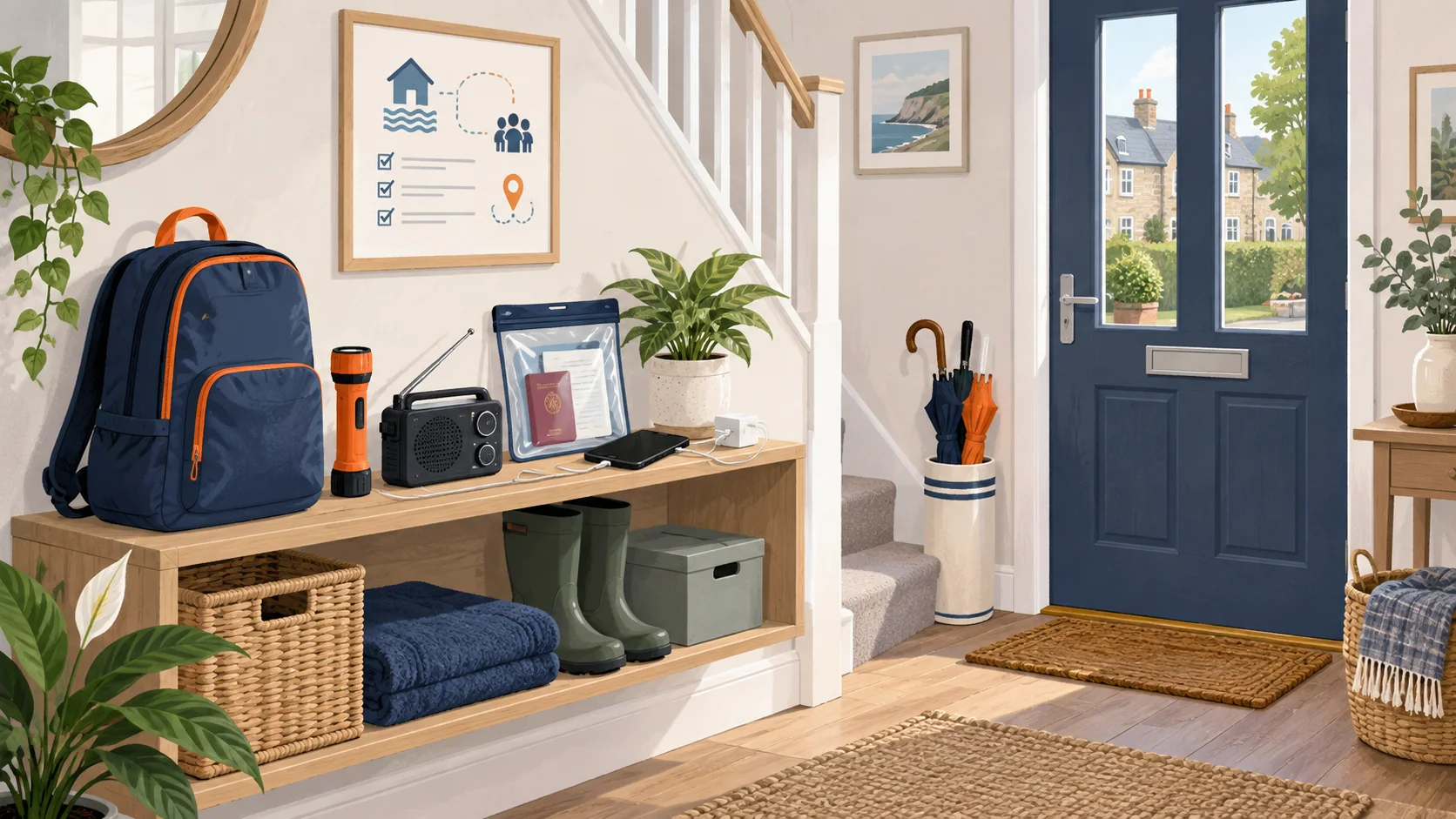
If you have to leave, take essential medicines, important documents and basic supplies for staying warm and safe. The ABI and NI Direct both publish emergency kit lists.
From the ABI: bottled water, spare house and car keys, a small amount of cash, blankets, a torch and essential medicines.
From NI Direct's emergency flood kit: copies of your home insurance documents; a torch with spare batteries; a battery powered or wind-up radio; warm, waterproof clothing, rubber boots and blankets; a first aid kit and supplies of medication needed by anyone in the house; bottled water and tinned or dried food; things for looking after your baby; essential medicines.
If your home is flood damaged and you cannot live there, GOV.UK advises: If your home is flood damaged and you're not able to live there, contact your local council for help getting emergency accommodation.
How Do You Make A Flood Plan Before It Happens?
You make a flood plan by writing down who to call, what to move, how to turn off utilities and where to go, before a flood is forecast. GOV.UK describes three kinds of plan: personal flood plan; community or group flood plan; business flood plan.
What a household flood plan covers:
- Contacts: Floodline, your insurer, your council, utility companies and family.
- Warnings: sign up for free flood warnings for your area.
- Utilities: where the stop tap, gas valve and fuse board are.
- Belongings: what to move and where.
- People and pets: where to go and how to get there without crossing flood water.
- Emergency bag: ready and easy to reach.
- Protection: where flood products are stored and how to fit them.
GOV.UK advises keeping your flood plan in a safe place with other essential items, such as spare medication, important documents and contact details. GOV.UK also points to further advice from the National Flood Forum or the British Red Cross.
Where Do You Get Official Flood Warnings?
Official flood warnings come from the Environment Agency in England, Natural Resources Wales and SEPA in Scotland, by phone, text or email, and through Floodline on 0345 988 1188. In Northern Ireland, NI Direct points to Met Office severe weather warnings.
- Warnings in force now: live flood warnings.
- What each level means: flood warning levels.
- After the water goes down: what to do after a flood.
floodriskchecker.co.uk is an independent website. It is not an emergency service and is not run by, or affiliated with, the Environment Agency, Defra, SEPA, Natural Resources Wales or any government body. This page carries no advertising.
Sources (Verified 17 Sep 2026)
| Claim | Source |
|---|---|
| About to be flooded steps; 999; do not walk or drive; flood water hazards; 105; gas; sewer; emergency accommodation; flood plans; National Flood Forum and British Red Cross | GOV.UK, What to do before or during a flood |
| Utilities after a flood | GOV.UK, What to do after a flood |
| Severe Flood Warning actions; Flood Warning lead time; Floodline textphone | GOV.UK, Flood alerts and warnings |
| Move car; documents; emergency bag | ABI, Recovering from a flood |
| Emergency flood kit; NI reporting line | NI Direct, Preparing for a flood |
| Stop tap, gas valve, fuse board locations | GOV.UK, Prepare for flooding: protect your property |